

How to Create a Sleep-Friendly Bedroom on a Budget
Good sleep is rarely about the most expensive mattress in the shop. It is usually about what your bedroom does to your senses between eleven and seven: how dark it is, how warm, how noisy, and whether the room feels like somewhere you rest or somewhere you store things.
None of that needs a smart ring, a sunrise alarm or a subscription. Most of it costs a few pounds and half an hour of noticing what actually wakes you at four in the morning.
Think of your bedroom as a machine for sending one message: the day is over. Every change you make should either remove a signal that says wake up or add one that says rest. The good news is that the strongest signals are boring and cheap: darkness, cool air, quiet, and a bed that feels like yours.
Make the room properly dark
Light is the strongest signal your body uses to decide whether it is night. A streetlamp through thin curtains, a router blinking on the landing, a phone face-up on the bedside table — all of it tells your brain the day is not finished.
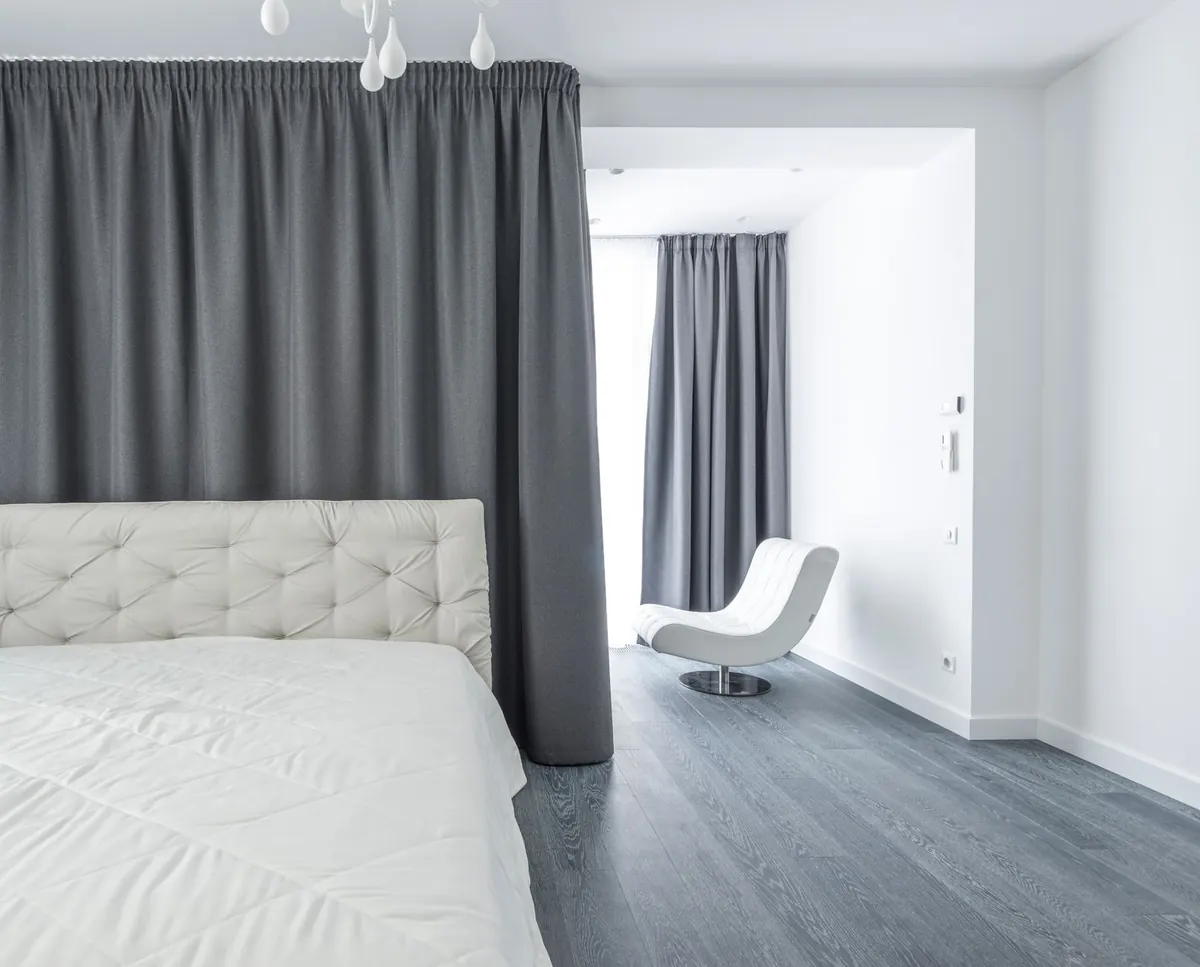
Start with the window. Blackout linings are sold separately from curtains and can be pinned or hooked behind what you already own. A blackout roller blind cut to the width of the recess and fitted close to the glass blocks more light than a curtain hanging an inch from the wall. If you rent and cannot drill, a tension rod inside the recess does the job — or an eye mask, which costs very little.
Do not ignore the edges. Light creeps in at the sides, the top and the bottom. A cheap blackout lining that is too narrow is almost useless. If your curtains gape in the middle, clip them together with a clothes peg or a small bulldog clip before you get into bed. If the gap at the bottom of the door lets in the hallway light, roll a towel along the floor or buy a draft excluder. If the landing light is on a timer, change the timer or cover the sensor with a piece of tape.
Deal with the small lights
Walk the room with the main light off and look for anything glowing. Most of it takes ten minutes to sort:
- Stand in the doorway with the lights off and scan the room. Look for standby lights, chargers, clocks, smoke alarms and anything with a blue or green LED.
- Cover LEDs with black electrical tape, a sticker or a small piece of card. A tiny blinking light can be surprisingly disruptive when the rest of the room is dark.
- Move routers, chargers and smart speakers away from the bed. Even if the light does not wake you, the hum and the glow can keep your brain half-alert.
- Turn your phone face down or, better, leave it charging in another room. If you use it as an alarm, buy a cheap bedside clock instead.
- Swap a bright hallway or bathroom light for a warm, low-level night light. If you need to get up in the night, use a small motion-sensor light near the floor, not the main switch.
If you need to see during the night, choose a red or amber light rather than white or blue. It is less likely to convince your body that morning has arrived.
Cool the room, not the whole house
Your body temperature needs to drop slightly for sleep to begin. Most people sleep best at around 16–18°C (60–65°F). You do not need air conditioning to get there. You need to stop trapping heat around your body and stop heating a room you are not using.
- Open a window for ten minutes before bed, even in winter. Fresh air lowers the temperature and clears the room.
- Turn off the radiator in the bedroom or turn the thermostat down for the night. If the rest of the house is warm, close the bedroom door.
- Choose breathable bedding. Cotton, linen and wool regulate temperature better than polyester. A lightweight cotton sheet plus a wool blanket often works better than a thick synthetic duvet.
- Use a fan strategically. Point it at the ceiling or across the room rather than directly at your body. A small clip-on fan costs little and uses less power than air conditioning.
- Take a warm shower or bath an hour before bed. It sounds contradictory, but it helps your body release heat afterwards.
If you sleep with a partner who likes a different temperature, two single duvets are cheaper and more flexible than one giant one. You can also layer a thin blanket on your side only.
Quiet the noise without buying a machine
Noise is not just volume; it is unpredictability. A lorry at 3 a.m. is worse than steady rain because your brain cannot tune it out. You can reduce the sudden sounds without soundproofing the whole room.
- Seal the gaps around the door with a draft excluder or a rolled towel. Sound travels through gaps more easily than through solid walls.
- Add soft things. A rug, a heavier curtain, a bookshelf and a full laundry basket all absorb sound. A bare room echoes; a softer room feels calmer.
- Hang heavy curtains or line your existing ones with an old blanket. The extra fabric blocks both light and sound.
- Try earplugs. Foam earplugs cost a few pounds for a pack. The cheap ones work well if you roll them properly and insert them correctly.
- Mask the rest with a fan or a free white-noise app. Keep the phone away from the bed and set it to turn off after an hour if you can.
If you live on a noisy road, a cheap pair of foam earplugs and a fan may do more for your sleep than a new mattress.
Make the bed a place for sleep only
The brain learns associations. If you work, eat, argue or scroll in bed, the bed becomes a place for thinking and worrying. If you only sleep there — and perhaps spend time with a partner there — the association gets stronger.
You do not need a new mattress to change that. Start with the bedside table. A lamp, a book, a glass of water and maybe a notepad are enough. Move the laptop, the paperwork and the half-finished mug somewhere else. If you have a pile of laundry on the end of the bed, put it in a basket or under the bed. If the room is small, use under-bed storage or a lidded box, but keep the sleeping surface clear.
Invest in one thing that touches your body: a clean pillowcase, a mattress topper, or a cotton sheet. A mattress topper can make a tired mattress feel much better for a fraction of the price of a new one. Wash your sheets regularly and air the duvet. These are small, cheap changes that make the bed feel more inviting.
A five-step budget reset
- Audit the light. Spend ten minutes at night with the main light off. Cover or move every glow you can see from the pillow.
- Set the temperature. Lower the radiator, open a window briefly, and switch to breathable bedding. Aim for cool, not cold.
- Block the noise. Seal the door, add a rug or curtain, and try earplugs. Mask what you cannot block.
- Clear the surface. Remove work, clutter and screens from the bed and bedside table. Keep only what helps you rest.
- Build a landing routine. Dim the lights an hour before bed, make a warm drink, read something paper, and go to bed at roughly the same time. The routine trains your brain as much as the room does.
What not to spend money on
You can spend a fortune on sleep. Most of it is not necessary. Sleep trackers can be useful for some people, but they can also make you anxious about a score you cannot control. Blue-light glasses may help a little, but turning off the phone and dimming the lamp is cheaper and more effective.
Expensive mattresses can help if yours is genuinely painful, but if your budget is tight, try a topper, a new pillow or a mattress protector first. You do not need a sunrise alarm, a weighted blanket, a silk pillowcase and a subscription meditation app all at once. Buy one thing, use it for a month, and see if it actually changes how you sleep.
The best sleep-friendly bedroom is not the one that looks like a hotel. It is the one that asks nothing of you at midnight.
Photo: Max Vakhtbovych / Pexels