
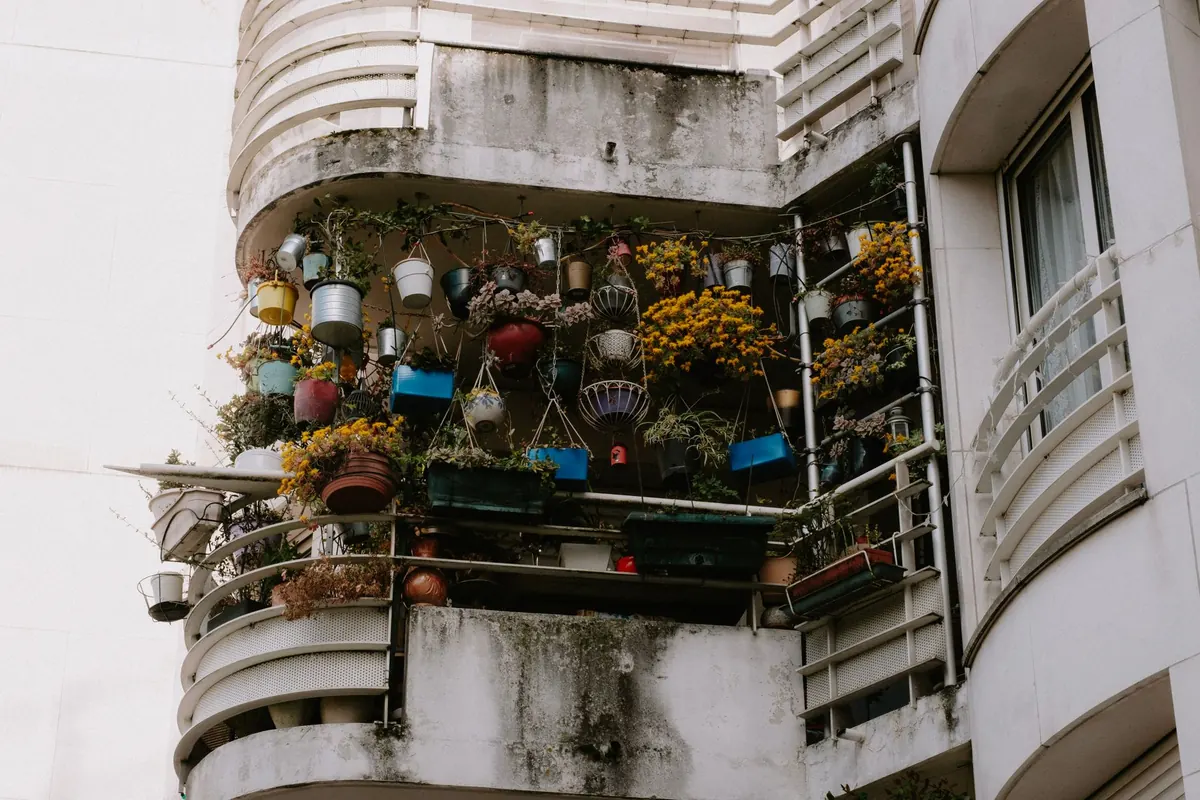
A balcony is an odd place to grow anything: a concrete shelf, usually windy, often without a tap, overlooked by dozens of windows. And yet bees find it. Bumblebees work rooftops several storeys up. Blue tits check window boxes. A red admiral will bask on a warm brick wall as if it had found a meadow. You are not recreating a garden up there. You are building a small, dense patch of habitat — a refuelling stop on a hard route — and that is a far easier job than it sounds.
Read the balcony before you buy a single plant
Light, wind, weight and water decide what will survive, so spend a week watching before you buy anything. Note which way it faces. A south-facing balcony can bake in summer and dry out in hours; a north-facing one may get little direct sun but hold moisture longer. East-facing gets morning sun, west-facing gets afternoon heat. Wind is the silent killer: a fifth-floor balcony can funnel gusts that snap stems and strip leaves. Watch how rain falls — or doesn't. Does the wall above shelter you, or does water pour off a roof? Check your tenancy or lease: some forbid fixing things to walls, some restrict weight. Weigh your pots dry, then imagine them soaked. A large ceramic pot with wet compost can weigh 50kg or more. You may need to distribute weight, use lighter containers, or choose smaller plants.
A quick balcony audit
- Sunlight: track it for a day. Full sun means 6+ hours; partial shade means 3–6; full shade means less than 3.
- Wind: note where gusts come from. A solid railing can create turbulence; a permeable screen is better.
- Water: is there an outdoor tap? If not, how far is the kitchen? Can you carry a watering can safely?
- Weight: check the structure. Concrete is strong, but old balconies may have limits. Keep heavy pots near the wall, not the edge.
- Rules: read your lease. Some ban hanging baskets, some require fire escape clearance.
Choose plants that earn their place
You have limited space, so every plant must do at least two jobs: feed pollinators, provide cover, smell good, or look beautiful. Native and near-native plants are best because UK insects evolved with them. But many Mediterranean herbs work brilliantly in sunny, windy spots. Think of a window box as a tiny meadow. You want a succession of flowers from early spring to late autumn. That means bulbs, perennials, and fast-growing annuals.
Best plants for a UK city balcony
- Early nectar: crocus, grape hyacinth, wallflowers. These feed early bees when little else is out.
- Summer stars: lavender, rosemary, thyme, marjoram, catmint, salvia. All drought-tolerant once established and loved by bumblebees.
- Long bloomers: nasturtium, cosmos, borage, calendula. Easy from seed, good for hoverflies and bees.
- Late season: sedum (ice plant), asters, helenium. These are vital for butterflies and late bees.
- Larval food: if you can, add nasturtium for cabbage white caterpillars, or a pot of wild strawberry for cover.
- Evergreen structure: rosemary, bay, ivy. Ivy is superb for wildlife but can be heavy; keep it in a pot and trim.
Avoid double-flowered varieties — they often have no nectar or pollen. Avoid bedding plants bred for colour alone, like busy Lizzies. They look bright but are useless for wildlife. Go for single, open flowers. A simple rule: if you can see the centre of the flower, insects can reach it.
Water, wind and weight: the practical trio
On a balcony, watering is not a chore; it is a daily relationship. Wind and sun dry compost fast. Without a tap, you need a system. A watering can is fine, but a small pump sprayer or a hose adapter for a kitchen tap can help. Mulch the surface with gravel or bark to slow evaporation. Group pots together to create a microclimate. Use saucers under pots to catch runoff, but empty them if mosquitoes become a problem. In hot weather, you may need to water twice a day. In winter, reduce watering to avoid root rot.
Windbreaks are essential. A solid wall of bamboo screening can be torn apart, and it creates damaging eddies. Instead, use a permeable screen: willow hurdles, a trellis with climbing plants, or even a row of tough shrubs. This slows wind without stopping it. Secure everything. Pots can become missiles in a storm. Use heavy bases, tie tall plants to railings, and avoid lightweight plastic pots in exposed spots.
Weight is the quiet constraint. Compost is heavy when wet. A 30cm pot can hold 20 litres of compost, which weighs around 15–20kg when saturated. Add the pot and a plant, and you are at 30kg. Ten of those and you have a serious load. Use lighter mixes: add perlite or vermiculite. Choose smaller pots for heavy feeders. Put the heaviest pots near the wall where the structure is strongest. If in doubt, ask a structural engineer or your landlord.
Beyond plants: shelter, nesting and a little mess
Wildlife needs more than food. It needs water, shelter, and places to breed. On a balcony, you can provide all three. A shallow dish of water with a few stones for landing will attract bees and birds. Change it every few days to prevent algae and disease. A small bird bath is lovely if you have space, but even a saucer works.
For nesting, put up a small bird box. Blue tits, great tits, and sparrows may use it if it is high enough and faces the right way (north or east to avoid overheating). A bee hotel — a bundle of hollow canes or drilled wood — can attract solitary bees like leafcutters and mason bees. Hang it in a sunny, sheltered spot. Don't forget
Photo: Mathias Reding / Pexels